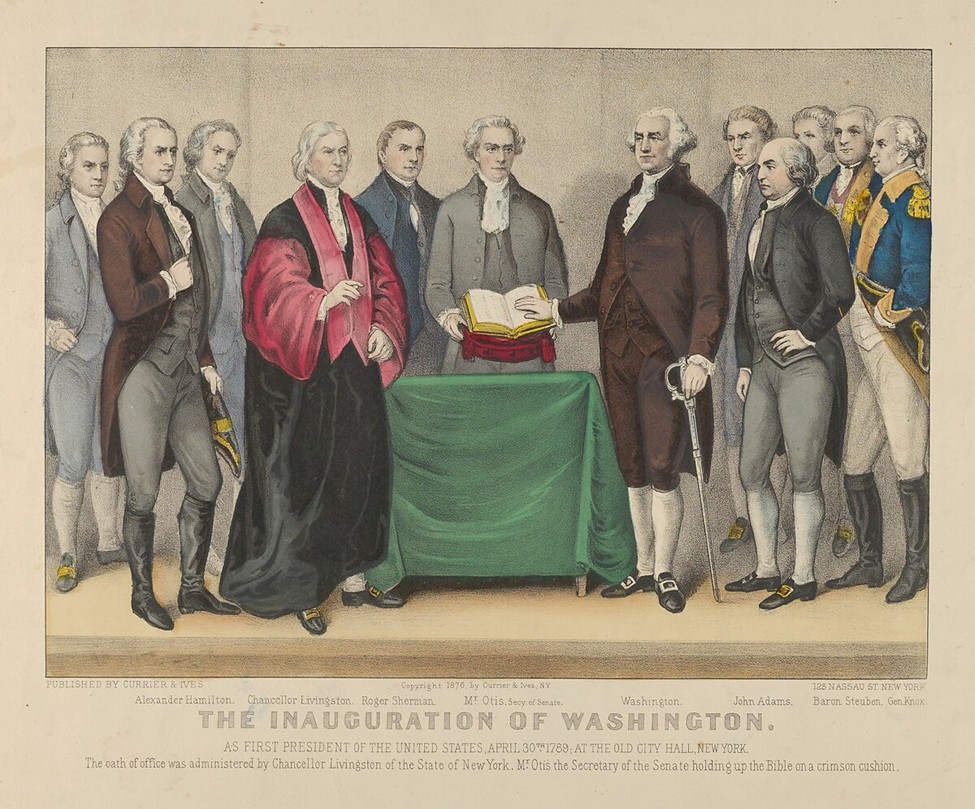


He laid the cause of his bleeding country at the throne of grace…
George Washington is called the Father of His Country, but do you know why?
Early life and education.
President Washington was born on February 22, 1732, in Virginia, to Augustine and Martha Ball Washington. Country air and abundant exercise in the rural open land developed a strong body that prepared him more for an active life than for an academic one. Most of his education was based on practical knowledge that later benefited his personal affairs and his country.
Early in life, he was inspired to military duty by his brother, Lawrence, who obtained a Navy captain’s commission. His father was a strong, moral, and principled influence until his early death; Washington credited his mother with the powerful Biblical and moral training he received.
Commander-in-Chief
After the French and Indian War, Washington successfully retired to Mount Vernon and, with industry and success, pursued a peaceful life. The British Parliament, however, had its sights leveled on the liberties of the American colonies through taxation and military occupation.
Washington was called again to serve his country to defeat this British tyranny. When he was appointed Commander-in-Chief of the Continental Army, he told his wife he was filled with “inexpressible concern.” Far from seeking the position, he used every means in his power to avoid it, believing it a task “too great for my capacity,” although he accepted it as “a kind of destiny.”
Forging an army for liberty
There are many stories told about our first president involving miracles, courage, and total reliance on Providence. What is rarely told is the story of building an army to confront the world’s greatest fighting force. As Commander-in-Chief, his “army” was a disorganized mob instead of a fighting force. Commenting on introducing military discipline, he said, “The officers were the most indifferent people I ever saw.” Introducing simple tactics and discipline to the volunteers was truly daunting—he had no staff, and there were confusion and disorder in every department. The soldiers stoutly resisted every attempt to weld them into a unified force. In addition, Congress failed to raise funds to furnish the army with weapons, uniforms, and supplies.
Despite these challenges that would have defeated any ordinary man, Washington bore the responsibilities of leadership—“his brain always at work and his pen never at rest.” He was a statesman in command of a revolutionary army. Always forgetful of himself, his many virtues kept the army from disbanding. George Washington had the spirit of a great leader, sustained by God and recognized Divine Providence in the American cause.
Washington’s Farewell Address
In George’s final address to the nation, he stressed the importance of the Union that bonded all Americans and secured our freedom and prosperity. The “independence and liberty” the nation enjoyed was the result of the “common dangers, sufferings, and successes” they had experienced together in the American Revolution and early years of the Republic. To safeguard their hard-won system of republican government in a federal union, the country had to remain united.
Teach the Children America’s Christian History
Family Time Talks
- How was George Washington prepared for his life’s work and calling?
- What challenges did he overcome to win the Revolutionary War?
- What was his main exhortation in the Farewell Address to Americans?
- Today, American politics is divided along party lines and over issues. What can we do, as American Christians, to resolve that division?
To bring harmony out of discord, to produce strength from weakness, and create resources where they did not exist, was the work assigned to George Washington.